
Search is changing so quickly, and seriously, if you haven’t wrapped your head around how big these changes are yet, now’s the time to catch up!
Artificial Intelligence (AI) has completely shaken up how we find, process, and present information to users. It’s totally rewritten the rules for brands online.
To give you the lowdown—quick, clear, and comprehensive—we’ve put together this 3-part series.
This first bit, Part 1, is all about setting the stage and explaining the core dynamic of AI Search in 2026.
The big takeaway? It’s shifting from simple keyword matching to smart, AI-driven intent fulfillment and getting conversational results.
Stick with us through the series to grab the knowledge and strategies you’ll need to adapt your online presence and digital marketing to ride the waves of this new era of AI-powered discovery.
🔎 SEO Opens the Door — Branding Decides Who Walks In
The landscape has shifted — Google remains active, but the behaviour of discovery has changed.
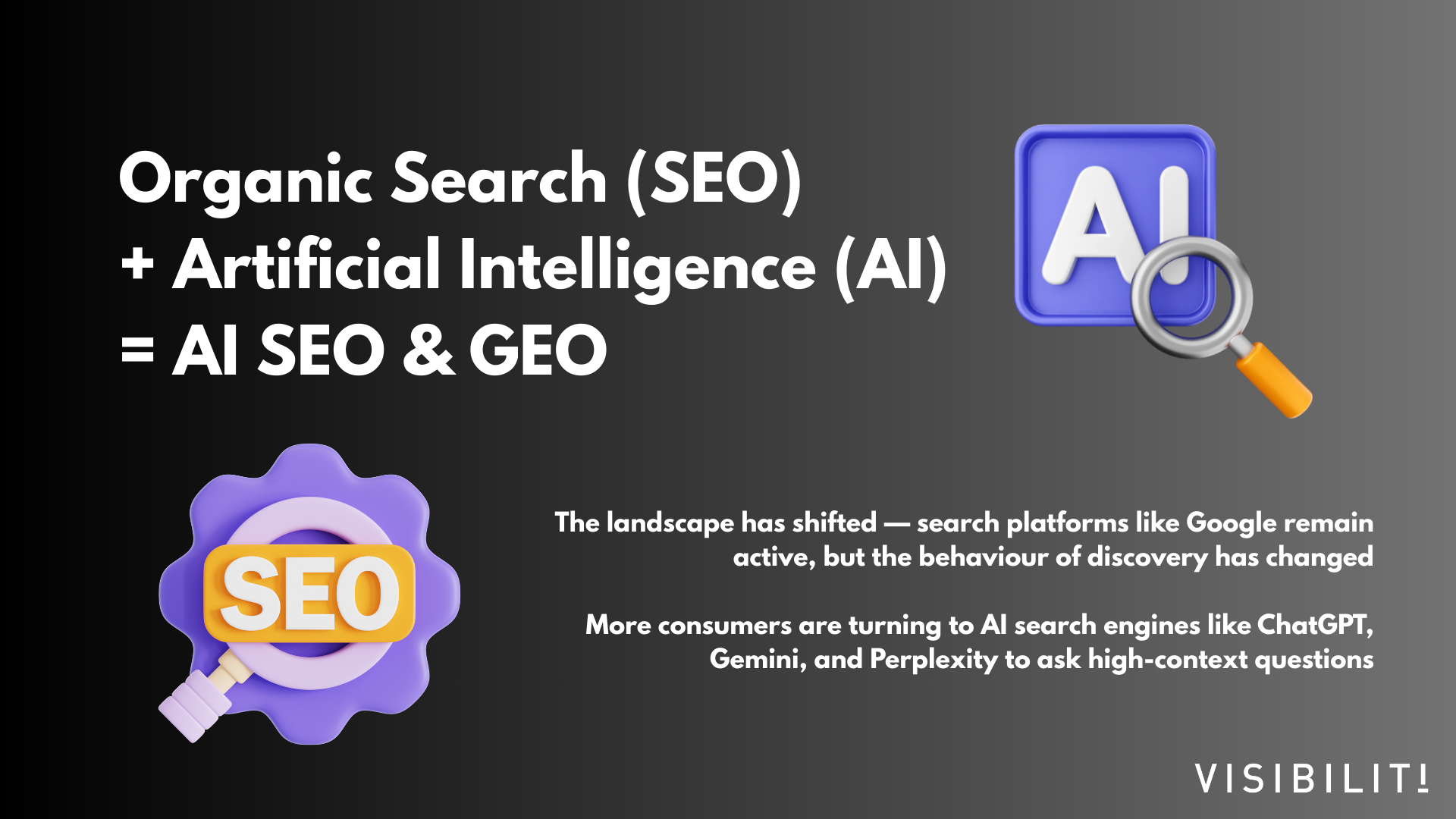
In Singapore, both SEO and SEM still form the foundation of visibility.
But more consumers are turning to AI search engines like ChatGPT, Gemini, and Perplexity to ask high-context questions:
Not just “preschool near me,” But “best bilingual preschool near East Coast that focuses on quality teaching, small class ratios, and fees between $2,000 – $3,000 per month.”
Not just “facial clinic singapore,” But “which aesthetic clinic offers doctor-led acne-scar treatment under $800 with transparent pricing and strong safety reviews?”
Unlike traditional search, AI engines don’t return 20 blue links.
They summarise answers and name only a few trusted brands.
If you’re not cited, you may never even make the shortlist — no matter how strong your SEO is.
Sources: Search Engine Land (2024) and SEO.com (AI/SEO impact study).
💡 Why Branding & Social Now Matter More
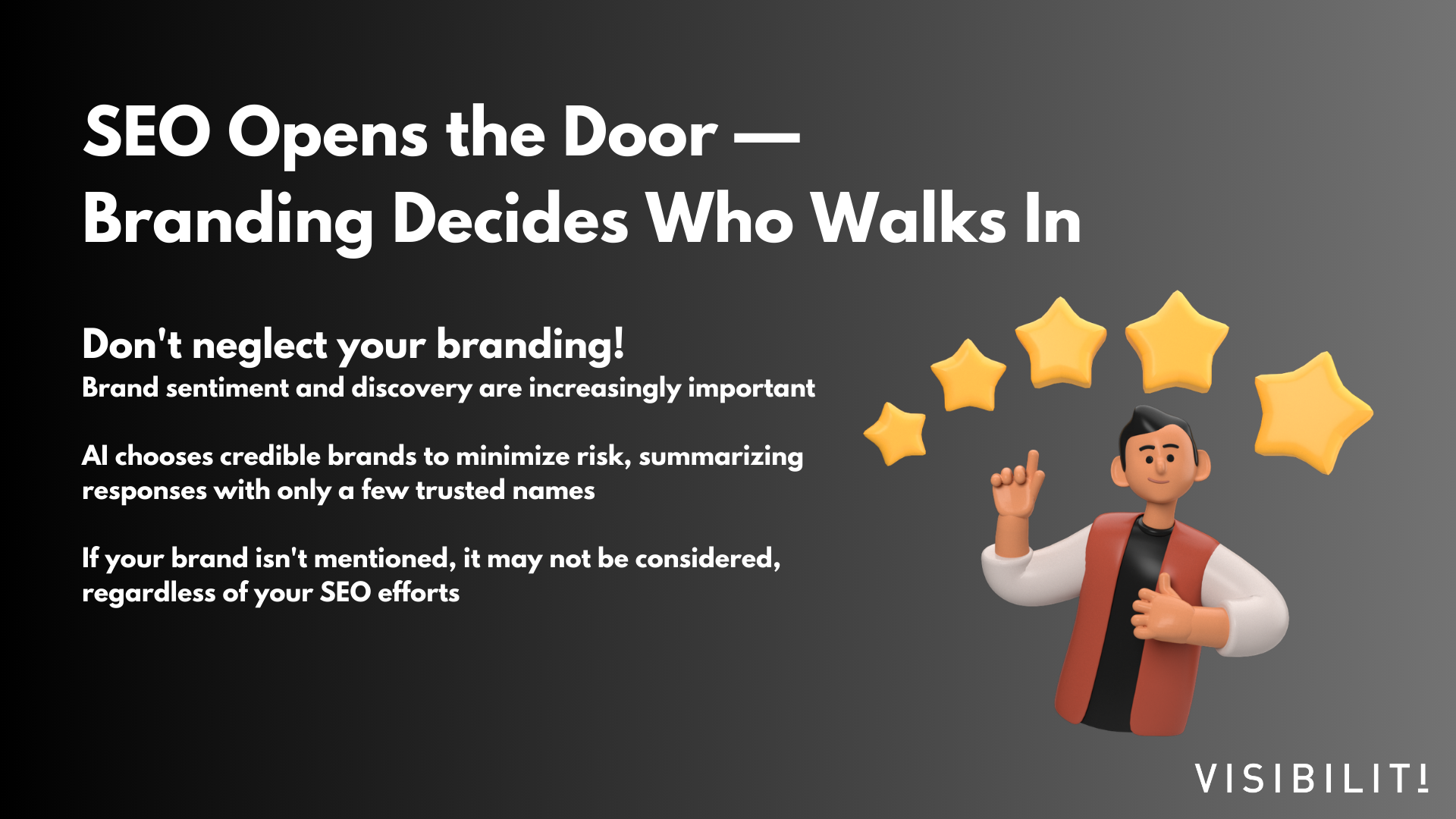
AI doesn’t cite brands at random — it hedges risk by choosing credible, consistent online entities.
- AI favours trusted names. Unknown or inconsistent brands are skipped.
- Content is commoditised — trust is not. Everyone can publish, but few can prove credibility.
- Active social presence shows life. A consistent LinkedIn, YouTube, or TikTok footprint signals authenticity.
That’s why brands that ignored identity and trust-building in the past are paying the price today.
Now is the perfect time to really focus on getting your brand seen online.
The digital world isn’t just a nice-to-have anymore; it’s the main stage where people find out about, connect with, and eventually stick with brands.
If you’re aiming for solid, long-term growth and want to grab a bigger slice of the market, you absolutely need to make a big, smart effort to boost your online visibility.
This means more than just having a decent website; it’s about a smart, all-around strategy that includes getting your SEO right, posting awesome stuff on social media, creating content that people actually want to read, and running targeted ads to make sure your story hits home with your ideal customers.
If you ignore this AI shift, you’re just handing over business to competitors who are already nailing their digital game.
✅ AI SEO Readiness Checklist
Tick what’s true for your brand today:
If you can’t tick most of these boxes, you risk being invisible when AI summarises the market.
📩 Executive Takeaway
SEO still opens the door.
But branding, credibility, and social proof decide who walks in.
Just take a look online, you’ll see AI Overviews and user search behaviour changing rapidly across customer segments.
Don’t fret, hold tight and we’ll see you soon for Part 2!
Related Posts
Achieve your business goals with qualified leads and sales through Digital Marketing
More Blog Posts

All Articles
All Articles

Digital Marketing
Digital Marketing

Business Insights
Business Insights

TikTok
Marketing
TikTok Marketing

Search Engine
Optimization (SEO)
Search Engine Optimization (SEO)

AI SEO & GEO Search Engine Optimization
AI SEO & GEO Search Engine Optimization

Search Engine
Marketing
(SEM)
Search Engine Marketing (SEM)

Social
Media Marketing (SMM)
Social Media Marketing (SMM)

Meta Facebook
Marketing
Meta Facebook Marketing
All
Articles
All Articles
Digital Marketing
Digital Marketing
Business Insights
Business Insights
TikTok
Marketing
TikTok Marketing
Search Engine
Optimization (SEO)
Search Engine Optimization (SEO)
AI SEO & GEO Search Engine Optimization
AI SEO & GEO Search Engine Optimization
Search
Engine
Marketing
(SEM)
Search Engine Marketing (SEM)
Social
Media Marketing (SMM)
Social Media Marketing (SMM)